Bring an existing asset into the right document and check which editable information survived.
You will learn
- Choose the right destination
- Use a compatible source
- Inspect dimensions and transparency
Choose the right destination
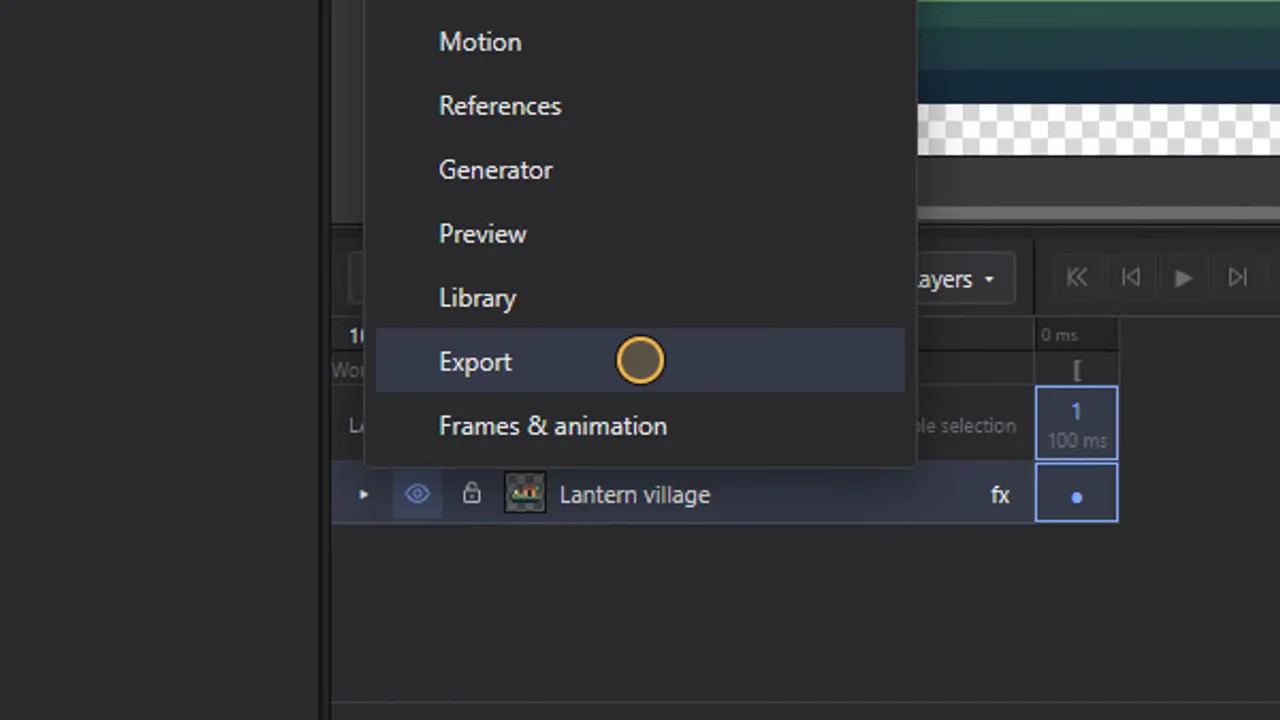
Open the intended project and use its import/open controls. A source for a drawing, a reference image and a map tileset have different roles. Decide whether you want editable artwork, a visual aid or reusable map pieces.
Check: The resource opens in the intended drawing, reference or tileset workflow.
Use a compatible source
Choose one of the formats offered by the file picker. A still image usually begins as flattened pixels. An animated GIF provides frames and timing within the format’s limits. A compatible Aseprite source can preserve supported layers, frames and tags.
Check: The import reports the expected layers or frames for that source.
Inspect dimensions and transparency
Check the imported size, palette, transparent border and active layer before drawing over it. If the file contains animation, inspect more than the first frame and compare timing.
Check: Dimensions and transparent edges match the original.
Save a Studio source copy
Keep the original import unchanged and save an editable project in the Studio. Unsupported source features should be reviewed visually rather than assumed to match another editor exactly.
Check: The original file and an editable Studio copy remain available.
If something does not work
The imported image has no editable layers
A still PNG or WebP normally contains flattened pixels. Preserve the original source and use a supported editable project or Aseprite import when layers are needed. Review imported animation frames and timing separately.